
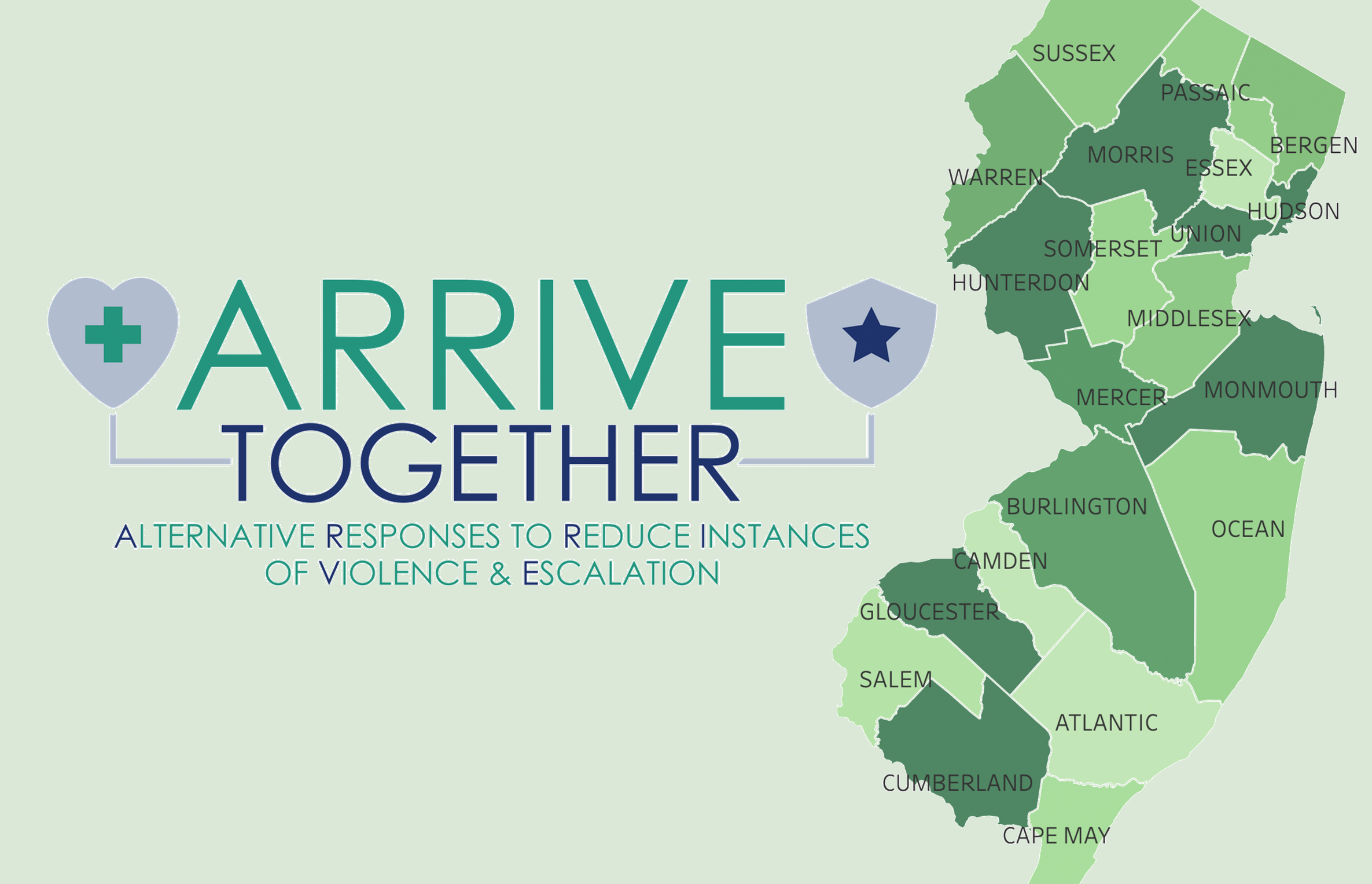
The Rutgers University Police Department – New Brunswick Division has announced its participation in the ARRIVE Together program in Middlesex County. ARRIVE Together—Alternative Responses to Reduce Instances of Violence and Escalation—pairs specially trained Rutgers Police officers with licensed mental health professionals from Rutgers University Behavioral Health Care. It is a statewide initiative, launched by the New Jersey Attorney General’s Office, that emphasizes compassion, coordination, and care when responding to individuals who may be experiencing a mental health crisis.
For any type of mental health call that RUPD deems necessary for a police response, trained officers and a mental health professional will respond together. The response focuses on de-escalation, safety, and connecting those in need with appropriate support services. This collaborative approach allows for real-time assessment and thoughtful intervention, often leading to referrals, voluntary treatment options, and follow-up care.
RUPD selected Officer Jacob Lugo and Detective Richard McNulty for this program. They were then trained in Crisis Intervention Team (CIT) principles. The weeklong training emphasizes how to approach each situation with empathy, professionalism, and a problem-solving mindset. Deescalation is an important part of the training, as officers do not always know what they are walking into, and the safety of the mental health professional, as well as the distressed individual is, key to successful outcomes.
For RUPD, deescalation training goes with the job. “Deescalation training is always something we prioritize at RUPD. It’s a mandatory training class we have to do,” Officer Lugo said. He added, “Use of force is always the last resort.”
The officer and mental health screener respond to a call in the officer’s squad car. While enroute, they continually assess the situation at hand. Rather than full uniform, officers dress in a less intimidating uniform: collared polo type shirt with an embroidered shield. The benefit of having the mental health screener arrive with the officer, is that an assessment can be made much more quickly. Once the situation is deemed safe, the screener takes over the visit.
Officer Lugo, is part of RUPD’s Community Policing Unit, and Detective McNulty, who received his Master of Social Work from Rutgers University School of Social Work, is also a Licensed Social Worker in the State of New Jersey. Both were drawn to the program because of prior experience with mental health issues among family and friends and those encountered while on calls. “Police officers do want the help of social workers because a lot of times mental health cases fall on law enforcement, and we might not be the best equipped to help an individual who is experiencing a crisis,” said McNulty. There have been over 18,000 ARRIVE interactions in New Jersey since its inception in March of 2022.
Participation in ARRIVE directly supports the Rutgers Police Department’s mission to provide effective policing and security services through active community partnerships that prevent crime and enhance the quality of life for all students, employees, and visitors, while prioritizing both public safety and human dignity.
Beyond immediate response, ARRIVE Together teams may conduct follow-up visits to promote continuity of care, and reduce the likelihood of future crises helping to build stronger, more trusting relationships within the community.
This article can be found in the IP&O Insights Newsletter July Issue.
